


Hong Kong
Vietnam
Philippines
Singapore
Thailand
Japan
UAE
Egypt
China
South korea
Malaysia





Chinese New Year is more than a festive date on the calendar. It’s an opportunity for companies to bring teams together, celebrate cultural diversity, and start the year on a positive note.
In this guide, you’ll discover:
Keep reading to learn how to celebrate Chinese New Year at work in a way that’s engaging, respectful, and impactful.
Chinese New Year, also widely known as Lunar New Year, marks the beginning of the lunar calendar and is an important cultural celebration across Asia. It is observed in China, Vietnam, Korea, Singapore, Malaysia, and across many Asian diaspora communities.
In 2026, Lunar New Year falls on 17 February, ushering in the Year of the Horse. The Horse symbolises energy, progress, independence, and momentum.
At its core, Lunar New Year is about renewal, togetherness, and good fortune. Families and communities gather to close out the old year, welcome new opportunities, and set positive intentions for the months ahead.
In the workplace, these themes translate well into moments of appreciation, team connection, and cultural celebration, making it a meaningful occasion to build inclusive and engaged work environments.
Understanding this broader context helps HR teams and event planners approach how to celebrate Chinese New Year at work in today’s diverse workplaces.
When planning how to celebrate Chinese New Year at work, the key is to balance cultural meaning with activities that fit your workplace. Below are 7 adaptable ideas that you can use to create an engaging Lunar New Year celebration in the office.
A Chinese New Year office party is one of the most effective ways to bring teams together and mark the occasion collectively.
We often recommend keeping the format simple but intentional, such as a lunchtime celebration, an after-work gathering, or a half-day festive programme. Key elements usually include entertainment, décor, and food that reflects Lunar New Year traditions.
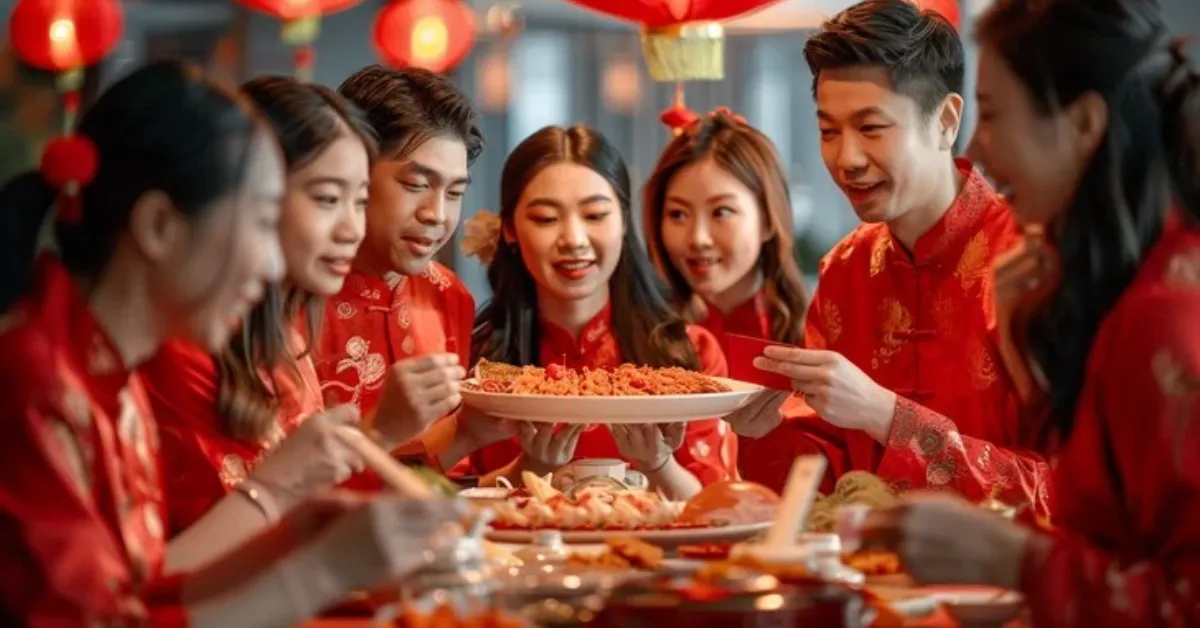
For larger organisations, breaking the celebration into smaller department-based sessions can help manage budgets while keeping the experience personal. Whether formal or casual, office parties work best when they focus on connection rather than scale.
Decorating the office helps signal that a special occasion is being recognised and sets a festive mood for employees and visitors alike. Common Lunar New Year elements include red lanterns, spring couplets with auspicious messages, floral arrangements, and zodiac-themed visuals.
For workplaces, moderation is key. We advise clients to opt for clean, modern décor that complements the office environment. Even simple touches in shared spaces like reception areas or meeting rooms can make the celebration feel festive without disrupting daily operations.
A lo hei, often referred to as a “prosperity toss”, is a Lunar New Year tradition commonly practised in workplaces across Singapore, Malaysia, and parts of East Asia.
The activity involves colleagues gathering around a large platter of yusheng, a colourful raw fish salad made up of multiple ingredients, each representing a positive wish for the year ahead. During the session, everyone uses chopsticks to toss the ingredients together while saying auspicious phrases. The higher the toss, the stronger the wish for success and abundance.
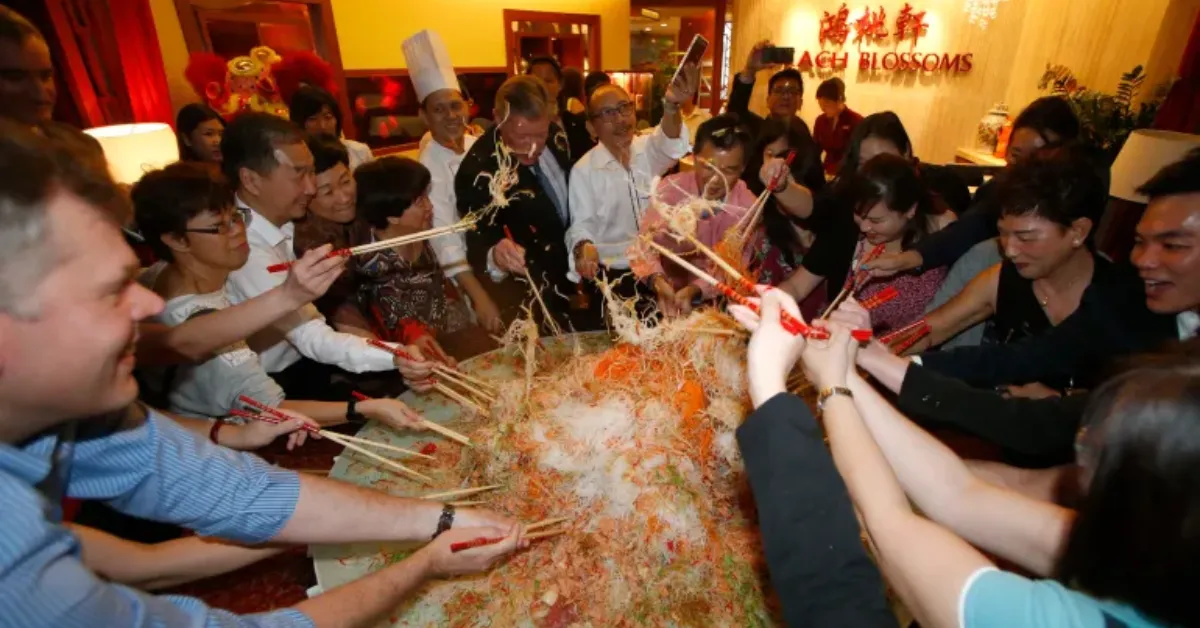
In an office setting, this tradition works best when it’s clearly explained and kept light-hearted. Many organisations choose to:
If a lo hei feels too specific for your team’s culture, a Lunar New Year–themed team lunch is an equally effective alternative. Sharing a festive meal, whether catered or hosted in-office, still captures the spirit of togetherness and renewal of Chinese New Year.
Spring cleaning is a meaningful but often overlooked Lunar New Year tradition. Symbolically, it represents clearing away bad luck and making space for new opportunities.
In the office, this can take the form of a short, guided clean-up session, decluttering shared spaces, or even refreshing noticeboards and pantry areas.
Many workplaces also take this opportunity to align spring cleaning with broader sustainability or social responsibility efforts. This includes organising recycling points, encouraging the reuse of office supplies, or collecting items for charity.
Games and light activities are excellent for boosting engagement, especially for teams that may not be familiar with the traditions. Based on what we’ve seen work well across corporate events, the following options are easy to run, require minimal setup, and encourage participation from all team members:
From experience, the most successful activities are easy to understand, quick to run, and inclusive. The goal isn’t competition, but interaction, creating moments where employees can relax, laugh, and connect.
Gift exchanges and red packets are widely associated with Lunar New Year, but in the workplace, they should be handled thoughtfully. Many organisations now opt for symbolic red packets containing vouchers, company tokens, or personalised notes rather than cash.
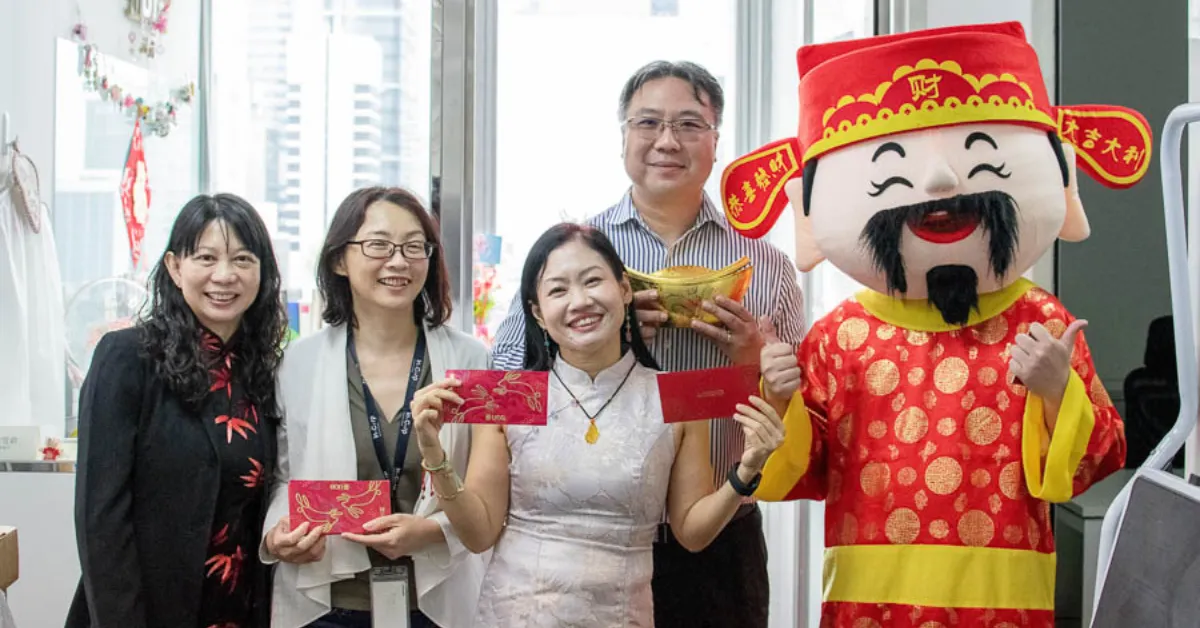
Alternatively, small festive gifts, such as snacks, desk items, or wellness-related products, are practical and well received. Setting clear guidelines helps avoid awkwardness and ensures the gesture feels inclusive and appropriate for a professional setting.
For teams looking to go beyond celebration and into learning, short cultural sharing sessions can add real value. These might include a brief talk on Lunar New Year customs or how different Asian cultures celebrate the occasion.
These sessions work best when kept informal and concise. 15 to 30 minutes is usually ideal. Whether led by internal team members or external facilitators, mini workshops encourage cultural appreciation and align well with broader diversity and inclusion initiatives in the workplace.
Understanding how to celebrate Chinese New Year at work goes beyond planning activities. It’s about ecognising the value these celebrations bring to people and the organisation as a whole. Companies that mark Lunar New Year thoughtfully often see benefits that extend well beyond the festive period:
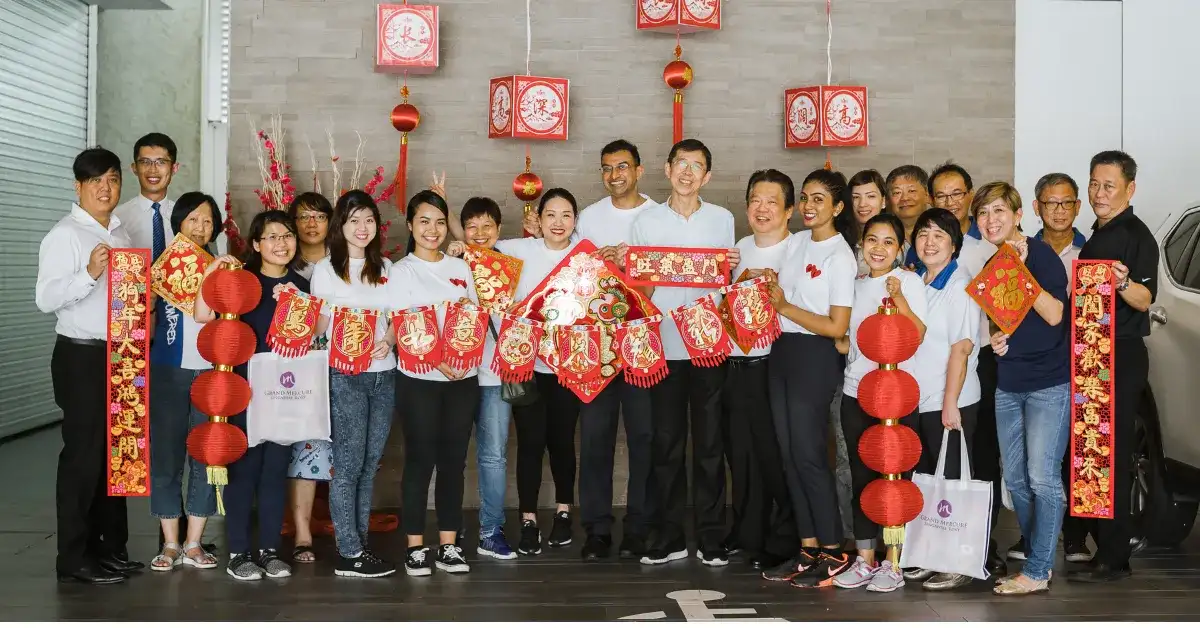
When done well, celebrating Chinese New Year at work is not just a festive gesture. It’s a strategic opportunity to build a more connected and inclusive workplace.
Knowing how to celebrate Chinese New Year at work effectively requires more than good ideas. The following tips will help HR teams and organisers deliver a celebration that is smooth, inclusive, and meaningful.
Chinese New Year often falls close to busy business periods, year-end reporting, or regional holidays. From a project management standpoint, early planning is critical. Locking in dates, formats, and internal approvals in advance helps avoid last-minute clashes.
We usually advise organisations to keep celebrations time-bound, such as a lunch-hour event or short programme, so teams can participate without disrupting core operations. Clear scheduling also allows leaders to show support by attending, which significantly boosts engagement.
While Lunar New Year has strong cultural roots, workplace celebrations should always be designed with inclusivity in mind. Avoid assumptions that everyone celebrates the same way or has the same level of familiarity with the traditions.
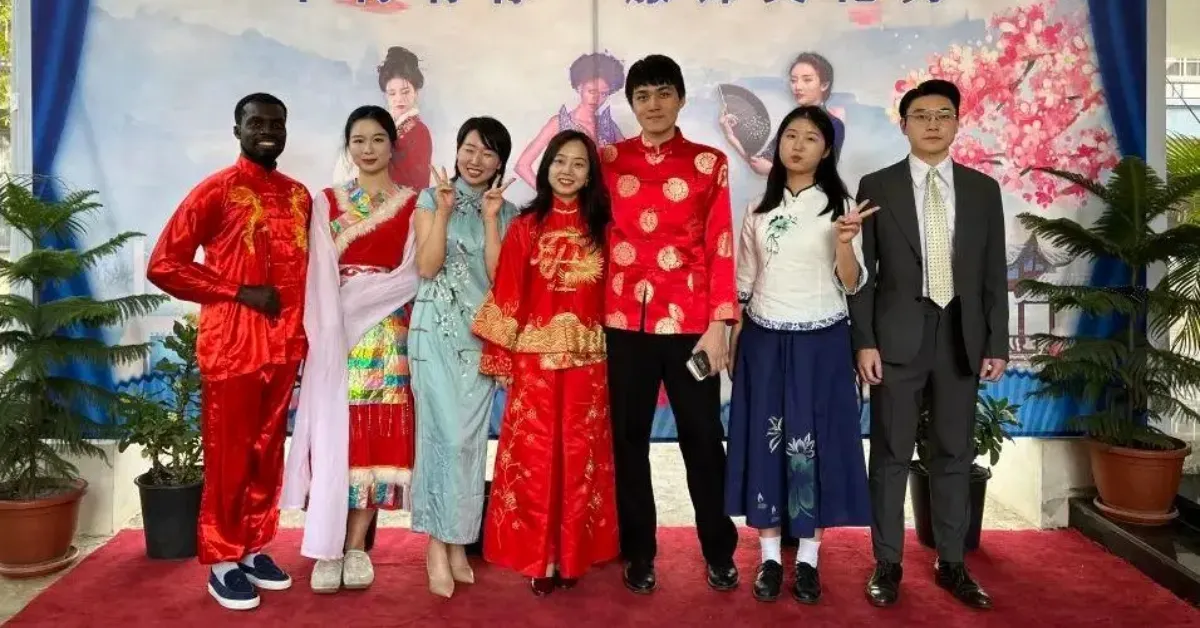
Simple steps like explaining the meaning behind activities, using neutral and welcoming language, and offering alternative ways to participate can make a big difference. The goal is to celebrate the occasion respectfully while ensuring all employees feel comfortable and included.
A successful Chinese New Year celebration doesn’t require a large budget but clarity. Setting a defined budget early helps determine the scope of activities, number of participants, and level of production. When budgets are aligned with objectives, the celebration feels intentional.
When workplace celebrations grow beyond simple internal planning, partnering with an experienced event team can make a measurable difference. Professional event partners help translate cultural moments into meaningful, well-executed experiences that align with your company.
At Dream Station, we work closely with HR and internal teams to plan and deliver Chinese New Year celebrations. From concept development and creative styling to vendor coordination and on-site management, our project managers ensure every detail is covered.
For organisations looking to celebrate Chinese New Year at work, a dedicated event partner helps turn ideas into experiences that feel thoughtful, professional, and memorable.
Celebrating Chinese New Year at work is an opportunity to strengthen team connections and start the year with positive momentum. Understanding how to celebrate Chinese New Year at work helps ensure the experience is both respectful and impactful. For more workplace celebration ideas, follow Dream Station with our latest updates.



We’ll get back to you as fast as we can with availability and next steps.
"*" indicates required fields

Hong Kong
Vietnam
Philippines
Singapore
Thailand
Japan
UAE
Egypt
China
South korea
Malaysia

OUR GLOBAL PRESENCE