


Hong Kong
Vietnam
Philippines
Singapore
Thailand
Japan
UAE
Egypt
China
South korea
Malaysia





Corporate events play an important role in driving engagement, learning, and business growth, but only if their impact is clearly understood. Knowing how to measure corporate event success helps internal teams and event planners move beyond assumptions and make informed decisions.
In this article, we explore how to set clear objectives, track the essential KPIs, and practical ways to collect and communicate event data. Keep reading to measure success with confidence and turn your corporate events into measurable business assets.
Measuring corporate event success allows organisations to move beyond assumptions and clearly understand the impact of their events. It turns activities into measurable outcomes that support business decision-making.

Before you can accurately measure corporate event success, you need clearly defined objectives. These objectives provide direction for your corporate event planning and determine which metrics matter most. Without them, it becomes difficult to measure success in a meaningful and consistent way.
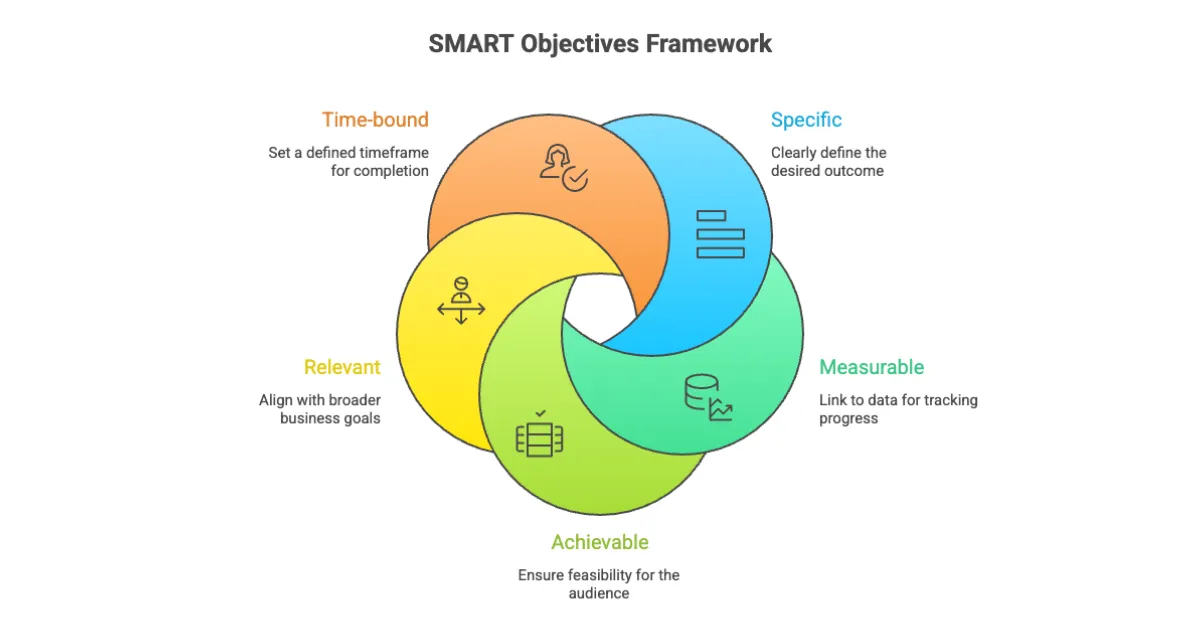
Clear objectives make it easier to measure corporate event success because they define what “success” actually looks like. Two practical frameworks commonly used by corporate event teams are SMART objectives and the Know–Feel–Do framework. Each serves a different purpose and can be used together for stronger results.
SMART objectives focus on precision and accountability. A well-written objective should be:
For example, instead of “improve product knowledge”, a SMART objective might be: “Increase product knowledge test scores by 20% among sales attendees within two weeks of the event.” This clarity makes post-event measurement far more reliable.
The Know–Feel–Do framework complements SMART by focusing on behavioural and emotional outcomes, which are often overlooked but equally important.
For instance, a leadership offsite might aim for attendees to know the company’s strategic direction, feel confident about upcoming changes, and do more effective cross-team collaboration.
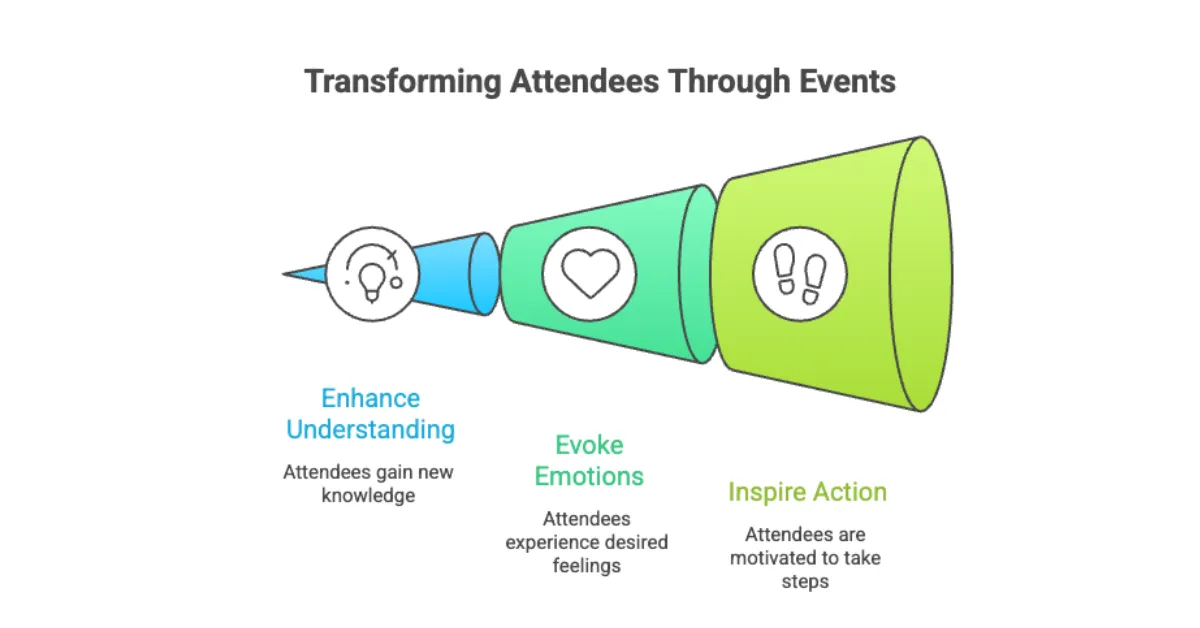
When these frameworks are clearly defined upfront, it becomes much easier to measure corporate event success in both quantitative and qualitative terms.
Corporate events are designed to serve different business needs, and those needs shape how you measure corporate event success. While every organisation is different, most corporate event objectives fall into a few common categories.
Defining the right category upfront ensures that success is measured against the purpose of the event, not generic metrics.
Once objectives are clearly defined, the next step is selecting the right KPIs. These indicators help teams measure corporate event success across attendance, engagement, satisfaction, and business impact. Choosing relevant KPIs ensures performance is assessed meaningfully rather than relying on surface-level metrics alone.
Attendance and registration metrics provide the first indication of whether your event reached the right audience. These KPIs focus not just on volume, but on commitment and conversion from interest to actual participation. Common metrics include total registrations, attendance rate, no-show rate, cancellation rate, and late registrations or walk-ins.
A high registration number with a low attendance rate may indicate weak reminder strategies, poor timing, or unclear value messaging. Conversely, a smaller but highly committed audience often signals strong relevance. For internal events, comparing attendance against the total invited population can reveal how well the event resonated with employees.
Tracking registration timelines also matters. Spikes after certain email campaigns or manager endorsements can highlight which channels drive action. For multi-day or hybrid events, session-level attendance shows which formats and topics held attention.
These metrics are especially useful when you need to measure corporate event success at an operational level. They help teams assess promotion effectiveness, audience targeting, and scheduling decisions. While attendance alone does not prove impact, it sets the foundation for all other KPIs.
Engagement and participation KPIs show how actively attendees interacted with the event. These indicators reveal whether the event experience encouraged involvement, curiosity, and dialogue. Examples include live poll responses, Q&A submissions, chat activity, session dwell time, or interaction with digital tools.
For physical events, engagement can be measured through session check-ins, audience questions, activity completion, or facilitator observations. In virtual or hybrid formats, data becomes even richer, capturing attention spans, interaction frequency, and content navigation patterns.

High engagement often reflects relevant topics, strong facilitation, and effective pacing. Low participation may point to content overload, unclear instructions, or formats that do not suit the audience. For example, an internal strategy town hall may show strong attendance but low Q&A activity, suggesting hesitation or lack of psychological safety.
These KPIs are essential when measuring corporate event success beyond surface-level metrics. They help explain how attendees experienced the event in real time and whether the design encouraged two-way communication. Over time, engagement data can guide better agenda planning, session formats, and audience interaction strategies.
Attendee satisfaction metrics focus on how participants perceived the overall event experience. Unlike engagement metrics, which track behaviour during the event, satisfaction KPIs capture reflection and sentiment after it ends. Common measures include post-event survey scores, net promoter score (NPS), qualitative comments, and satisfaction ratings across logistics, content, and delivery.
Well-designed surveys balance scale-based questions with open-ended feedback. Asking attendees what they found most valuable and what could be improved provides insight that numbers alone cannot. For example, high satisfaction with speakers but lower scores for event flow may indicate scheduling or transition issues.
Internal events often use satisfaction metrics to assess morale, alignment, and perceived usefulness. External-facing events may focus more on overall experience and brand impression. Tracking satisfaction over multiple events allows teams to identify trends and understand whether improvements are delivering noticeable results.
When teams measure corporate event success, satisfaction data plays a critical role in explaining outcomes such as repeat attendance or advocacy. While subjective by nature, consistent measurement and thoughtful analysis turn satisfaction feedback into a reliable decision-making tool.
Content and programme performance KPIs assess how well individual sessions and the overall agenda delivered value. These metrics help teams understand which topics, formats, and speakers resonated most with the audience. Typical indicators include session attendance, early drop-off rates, content ratings, speaker feedback, and resource downloads.
Analysing session-level data often reveals patterns. For instance, consistently high attendance for practical workshops may signal a preference for hands-on learning. While declining numbers in long presentations may indicate fatigue or information overload. Comparing scheduled session length against actual engagement can also guide future programme design.
For internal training or leadership events, content performance may be measured through relevance ratings and perceived applicability to daily work. External events may prioritise thought leadership impact or topic relevance to industry challenges.
These KPIs are particularly useful when refining future agendas. Rather than guessing what worked, teams can rely on evidence to prioritise high-performing themes and adjust underperforming segments.
Social media and brand awareness KPIs evaluate how far the event’s influence extended beyond attendees. These metrics are most relevant for launches, conferences, and externally facing events, but internal events can also benefit. Common indicators include hashtag usage, mentions, reach, impressions, engagement rate, follower growth, and share of voice.
Monitoring activity before, during, and after the event provides context. Pre-event buzz shows anticipation, live posting reflects real-time engagement, and post-event mentions indicate lasting interest. A spike in engagement during keynote moments, for example, may highlight content that resonated strongly.

Brand awareness KPIs should be interpreted alongside sentiment. High reach with neutral or negative commentary requires a different response than smaller volumes of highly positive feedback. For internal audiences, social engagement can reflect pride, alignment, or willingness to represent the organisation publicly.
When teams measure corporate event success, these KPIs help connect events to broader brand and communications goals. They also provide valuable insight for marketing teams looking to repurpose content and extend event impact beyond the venue or broadcast window.
Lead generation and sales pipeline KPIs connect events directly to commercial outcomes. These metrics are critical for exhibitions, product launches, and client-focused events where revenue impact is a primary objective. Common measures include leads captured, lead quality, meeting requests, follow-up conversion rates, and influenced pipeline value.
Not all leads are equal. Tracking qualification criteria, such as role, budget authority, or intent, helps teams understand whether the event attracted the right audience. For longer sales cycles, attribution may focus on contribution rather than direct conversion, linking event attendance to future opportunities.
Sales and marketing alignment is essential when interpreting these KPIs. Clear definitions of what counts as a qualified lead ensure consistency and credibility when reporting results. For example, an event may generate fewer leads but a higher percentage of sales-ready prospects.
These metrics play a central role in measure corporate event success when business growth is the goal. They provide tangible evidence of impact and help justify investment in future events.
Networking and relationship building KPIs focus on connection quality rather than quantity. These metrics are especially relevant for executive dinners, partner events, and internal gatherings where trust and collaboration are the main objectives. Indicators may include number of meaningful conversations, follow-up meetings, stakeholder feedback, or continued engagement after the event.
Unlike transactional KPIs, these metrics often rely on qualitative input. Post-event interviews, surveys, or manager feedback can help assess whether relationships were strengthened or new connections were formed. For example, an executive roundtable may be deemed successful if it leads to ongoing dialogue rather than immediate action.
Tracking follow-up activity is particularly valuable. Emails exchanged, meetings scheduled, or collaborative projects initiated provide evidence that connections made during the event translated into real outcomes.
Sponsorship and partnership KPIs assess whether the event delivered value for external stakeholders. These metrics are crucial for maintaining trust and securing future sponsorship. Common indicators include brand exposure, booth traffic, session attendance, lead sharing, and sponsor satisfaction scores.
Clear expectations should be set before the event. If a sponsor’s goal is visibility, impressions and placement quality matter most. If lead generation is the priority, data capture and follow-up outcomes become key. Post-event reporting should align directly with these agreed objectives.
Sponsor feedback provides additional insight. Surveys or debrief calls can highlight what sponsors valued and where improvements are needed. This qualitative input often influences renewal decisions as much as numerical performance.
Strong sponsorship outcomes not only support event profitability but also enhance reputation, making it easier to attract high-quality partners for future events.
Learning and knowledge transfer KPIs evaluate whether attendees gained and applied new information. These metrics are central to training sessions, onboarding programmes, and leadership development events. Common measures include pre- and post-event assessments, confidence ratings, knowledge checks, and behavioural change indicators.
Immediate learning can be measured through quizzes or self-assessments, while longer-term impact requires follow-up. For example, managers may be asked to observe changes in performance or application of skills weeks after the event.
Not all learning outcomes are technical. Soft skills, strategic understanding, and mindset shifts can be assessed through reflective feedback or scenario-based questions. Combining quantitative scores with qualitative insights provides a fuller picture.
These KPIs ensure that events contribute to capability building rather than information overload. Over time, they help refine content depth, pacing, and instructional methods.
Long-term impact metrics examine outcomes that appear well after the event concludes. These KPIs provide the most strategic view of success, focusing on sustained change rather than immediate reaction. Examples include performance improvement, employee retention, cultural alignment, ongoing engagement, or long-term revenue influence.
These metrics often require collaboration across teams. HR data may reveal retention or engagement shifts after major internal events, while sales data can show pipeline progression linked to client-facing programmes.
Because many variables influence long-term outcomes, context is essential. Events should be assessed as contributors rather than sole drivers of change. Trend analysis over multiple events helps strengthen attribution and credibility.
When teams aim to measure corporate event success holistically, long-term metrics provide the strongest evidence of strategic value. They demonstrate how events support organisational goals over time, reinforcing their role as investments rather than standalone activities.
To accurately measure corporate event success, data must be collected at the right moments and through appropriate methods. Gathering information before, during, and after the event ensures a complete view of performance, audience behaviour, and business impact.
Pre-event measurement focuses on understanding interest, expectations, and readiness before the event takes place. This stage helps teams set benchmarks and identify early signals that may influence overall outcomes. Key data sources at this stage often include:
For example, slow registration momentum may suggest unclear messaging or competing priorities, prompting additional outreach. Pre-event data provides context for later results as it explains the starting point and audience intent rather than focusing only on outcomes.
During-event measurement captures real-time behaviour and experience as the event unfolds. This data reflects how attendees actually interact with the programme. Common methods include:

Capturing this data allows organisers to respond immediately or document insights for future improvement.
Post-event measurement focuses on outcomes that emerge after the event concludes. Rather than relying on a single follow-up, effective teams collect data across multiple timeframes to capture both immediate reactions and longer-term impact. A structured timeline typically includes:
Collecting data across all stages of the event lifecycle provides a more accurate and balanced view of performance. This helps teams measure success with greater confidence and make informed decisions.
Once results are collected, the next step is presenting them clearly to different stakeholders. Communicating insights in the right format helps teams measure corporate event success in business terms, ensuring outcomes are understood, valued, and used to inform future decisions.
Executive leadership typically wants a strategic narrative rather than operational detail. Focus on how the event contributed to organisational priorities such as growth, alignment, or transformation. Leaders need to understand not just what happened, but why it mattered.
Reports for executives should open with a concise summary of the event’s objectives and a clear statement on whether those objectives were achieved. From there, highlight a small number of high-impact KPIs that link directly to business outcomes.
For example, instead of listing engagement scores by session, explain how the event improved leadership alignment or accelerated decision-making. Visual dashboards, short executive summaries, or briefing slides are often more effective than detailed reports.
Context is also critical. Comparing results against previous events or internal benchmarks helps leadership interpret performance quickly. When teams can clearly articulate outcomes and implications, executives are better equipped to assess how the event supports wider strategy.
HR and people teams view events through a human and organisational lens. When sharing results with this audience, the emphasis should be on engagement, learning, culture, and employee experience. Data should help HR understand how the event supported people initiatives and workforce outcomes.
Effective reporting combines quantitative indicators, such as satisfaction scores or learning assessments, with qualitative insights from attendee feedback. Patterns in sentiment, recurring themes in comments, and changes in confidence or motivation are particularly valuable. For example, an internal conference may reveal stronger alignment with company values or improved understanding of leadership direction.
Connecting event outcomes to existing HR programmes increases relevance. Linking results to leadership development, onboarding, wellbeing, or retention initiatives helps HR teams use the data to inform broader decisions.
Finance and budget stakeholders require clarity, consistency, and evidence. Communication should focus on cost control, efficiency, and value delivered relative to spend. Reports should clearly outline the total budget, actual expenditure, and key cost drivers to establish transparency and credibility.
Beyond costs, finance teams want to understand outcomes in measurable terms. This may include cost per attendee, cost per lead, or comparisons with alternative activities. For example, demonstrating that a client event generated high-quality opportunities at a lower acquisition cost helps finance teams evaluate return objectively.

Clear assumptions and definitions are essential, particularly when attributing revenue or long-term value. When financial stakeholders can see a logical connection between spend and outcomes, it becomes easier to support future investment decisions with confidence.
Department leaders and managers are most interested in how the event affected their teams’ performance and priorities. When communicating results, insights should be tailored to functional relevance.
Department-level participation, engagement patterns, and feedback help managers assess whether the event met their teams’ needs. For instance, a sales manager may focus on improvements in product confidence or customer messaging. While an operations leader may look for clarity around processes or cross-team collaboration.
Practical outcomes matter most to this group. Sharing examples of behaviour change, improved collaboration, or follow-up actions helps managers understand how the event translated into day-to-day impact.
Measuring corporate event success comes with several practical challenges. Presenting these clearly helps teams anticipate issues and apply realistic solutions:

While these challenges are common, they should not prevent teams from measuring outcomes altogether. With clear objectives, realistic KPIs, and consistent processes, organisations can measure success in a practical, credible, and actionable way.
Measuring corporate event success starts with clear objectives, relevant KPIs, and consistent data collection. When results are analysed and communicated effectively, events become strategic tools that support business goals.
If you need expert support to plan, deliver, and measure high-impact corporate events, Dream Station is here to help. Speak to our corporate event management team to design events that not only engage audiences but also deliver results.



We’ll get back to you as fast as we can with availability and next steps.
"*" indicates required fields

Hong Kong
Vietnam
Philippines
Singapore
Thailand
Japan
UAE
Egypt
China
South korea
Malaysia

OUR GLOBAL PRESENCE