


Hong Kong
Vietnam
Philippines
Singapore
Thailand
Japan
UAE
Egypt
China
South korea
Malaysia





Planning a successful corporate event starts with one critical decision: choosing the right partner. Selecting the right corporate event company can shape everything. With so many agencies offering similar promises, knowing how to assess and shortlist the best fit can feel overwhelming.
This guide is designed to help you choose a corporate event company that aligns with your goals, resources, and expectations. We will break down what to consider, what to avoid, and how to compare options effectively. Read on to make an informed decision and set your next event up for success.
Choosing an event partner is not just a logistical decision. It directly affects how your brand is perceived, how smoothly your event runs, and whether your objectives are achieved. The right corporate event company acts as an extension of your internal team, while the wrong one can create unnecessary risk and pressure.
Here is why this decision deserves careful evaluation:
Understanding the true impact of this choice sets the foundation for a more structured and confident selection process. Continue reading to learn how to assess your needs and evaluate potential partners effectively.
Before reaching out to agencies, it is essential to clarify what you actually need from an event partner. This step ensures you can shortlist the right corporate event company based on fit, not assumptions, before moving into detailed planning.
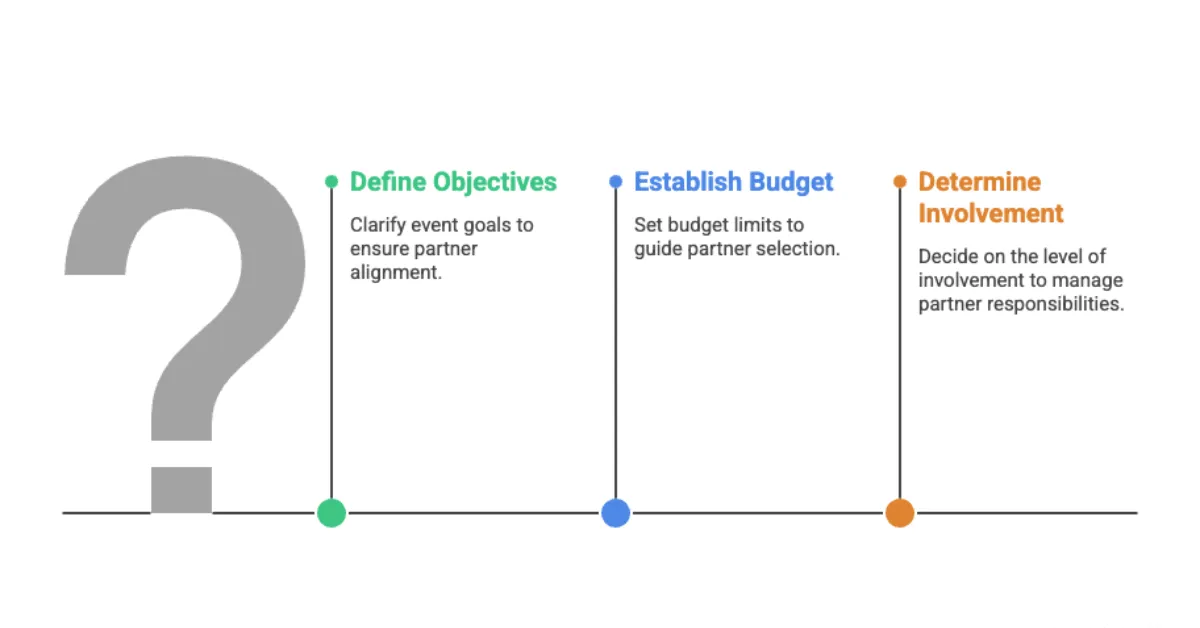
Clear objectives provide direction for every planning decision. Before speaking to agencies, identify what success looks like for your event. Is the goal to educate employees, generate qualified leads, strengthen client relationships, or reinforce company culture?
Consider setting measurable outcomes such as attendance numbers, post-event feedback scores, or leads generated. When you can clearly explain your goals, it becomes easier to assess whether a corporate event company has the strategic thinking and experience to support them.
Defining a realistic budget early helps avoid misalignment and uncomfortable surprises later. Instead of sharing a vague figure, outline what the budget needs to cover and where flexibility exists. Key elements to consider include:
For instance, some organisations allocate 10–15% of the total budget as a buffer for last-minute changes. Being transparent about financial boundaries allows agencies to propose solutions that balance creativity, quality, and cost, making it easier to evaluate value rather than price alone.
Different internal teams require different levels of external support. Some prefer full-service event management, while others want strategic guidance alongside hands-on execution. Clarify how involved your team plans to be throughout the corporate event planning process.
Ask yourself:
Understanding this upfront helps you identify partners whose working style complements yours, ensuring smoother collaboration and fewer friction points during planning and delivery.
By clarifying these fundamentals early, you create a strong reference point for evaluating potential partners. This groundwork makes it easier to have productive conversations, compare proposals fairly, and identify which agencies are truly aligned with your needs.
Once your requirements are clear, the next step is to evaluate potential partners objectively. Use these eight factors to identify the right corporate event company that can consistently deliver reliable, well-executed events.
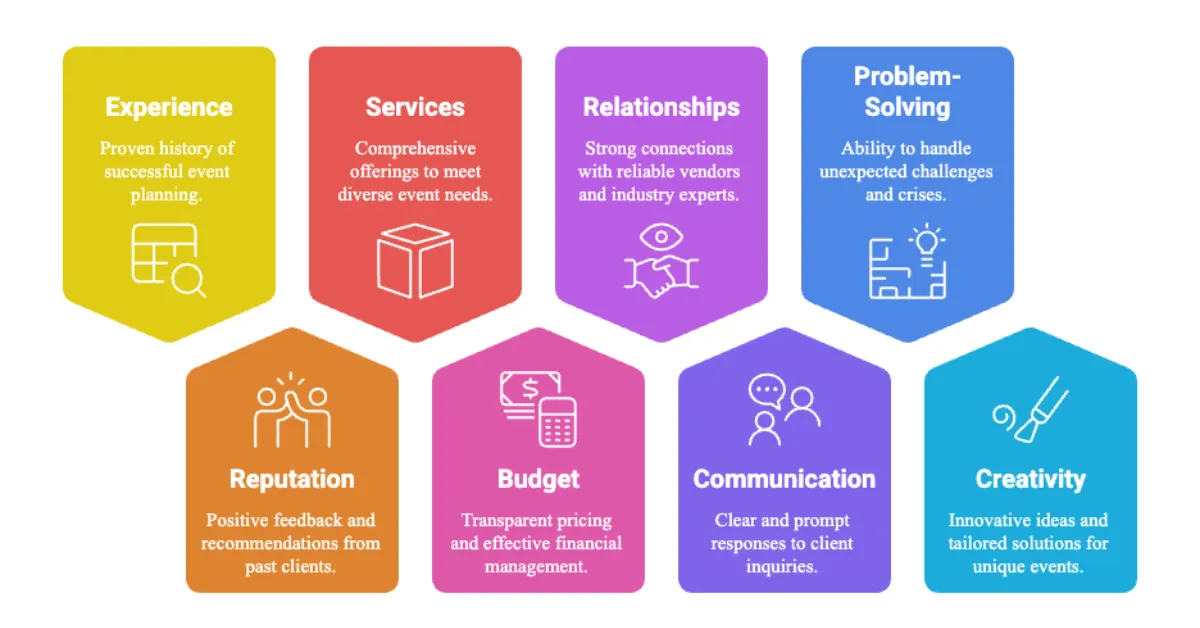
Experience goes beyond the number of years an agency has been operating. What matters more is whether their past work is relevant to your type of event and organisational context. A company that regularly delivers large-scale conferences may not be the best fit for an intimate leadership retreat, and vice versa.
When reviewing track record, look for events similar in size, format, and objectives to yours, repeat clients, and clear outcomes. Ask for specific examples rather than generic portfolios. For instance, how did they manage a tight turnaround, a complex venue, or a high-profile audience?
Concrete stories reveal how the team performs under real conditions and help you judge whether their experience aligns with your expectations.
A strong reputation is usually built over time through reliable delivery and professional conduct. Beyond testimonials on a website, seek independent validation of an agency’s credibility. Practical ways to assess reputation include:
When speaking to references, ask about responsiveness, transparency, and how issues were handled. An agency praised for accountability and follow-through is often a safer choice than one known only for creative flair. Consistent, positive feedback across multiple sources is a strong indicator of a dependable partner.
Understanding an agency’s service scope helps you avoid gaps or duplication in responsibilities. Some corporate event companies focus mainly on logistics, while others provide end-to-end support from strategy to post-event evaluation.
A broader offering can simplify coordination, especially for complex events. However, depth matters as much as breadth. Ensure the services you need are handled in-house or by trusted specialists, rather than being outsourced without clear oversight.
Transparent budget handling is critical for maintaining trust and control. A professional event company should be able to explain how costs are built, where margins sit, and how changes affect the overall budget.
Look for clarity around itemised proposals rather than lump-sum figures, payment milestones and cancellation terms, and how cost overruns or savings are managed.
For example, experienced agencies often flag cost drivers early and suggest alternatives to stay within budget. A clear pricing structure allows you to compare proposals fairly and assess value, rather than being swayed by the lowest initial quote.
Strong supplier networks can significantly improve event outcomes. Agencies with established relationships often secure better pricing, priority access, and more reliable service from venues, technical crews, and creative partners.
Well-connected event companies can recommend vendors suited to your specific needs, resolve issues faster through trusted contacts, negotiate more favourable terms on your behalf.
Ask how long they have worked with key suppliers and how vendor performance is monitored. Consistent partnerships usually indicate mutual trust and smoother collaboration, which reduces risk during execution.
Clear communication underpins every successful event. From the first enquiry, pay attention to how promptly and clearly the agency responds. Key indicators include:
An agency that communicates proactively helps prevent misunderstandings and keeps stakeholders aligned. This becomes especially important as deadlines approach and decisions need to be made quickly.
Unexpected challenges are part of event planning. What differentiates agencies is how they respond when things do not go as planned. Effective problem-solving requires preparation, experience, and calm decision-making.
Ask agencies to share examples of last-minute speaker cancellations, technical failures during live events or sudden changes in venue or regulations. A capable team plans contingencies in advance and acts decisively when issues arise.
For instance, having backup equipment or alternative programme flows ready can prevent disruptions. Strong crisis management protects your event objectives and reassures stakeholders that risks are being handled professionally.
Creativity should serve a purpose, not distract from your message. The best agencies design experiences that reflect your brand, audience, and objectives rather than relying on generic formats.
Evaluate creativity through:
For example, a leadership retreat may benefit from subtle experiential elements, while a brand activation may require bold visual storytelling. An agency that understands when and how to customise ensures your event feels intentional and relevant. This thoughtful approach helps your event stand out while staying aligned with business goals.

Evaluating these factors together gives you a balanced view of each potential partner, beyond surface-level proposals. This structured approach helps you compare agencies objectively and avoid decisions based on price or presentation alone.
Not every agency is a good fit, even if their proposal looks appealing on the surface. Being aware of common warning signs can help you avoid costly mistakes when selecting the right corporate event company. Key red flags to look out for include:
Spotting these warning signs early helps you filter out unsuitable partners before they create unnecessary risk. A cautious approach protects your budget, timeline, and internal credibility.
Once you have a shortlist, the challenge shifts from evaluation to selection. Comparing agencies systematically helps you move beyond impressions and choose the right corporate event company with confidence.
Start by creating a simple comparison matrix that scores each agency against key criteria. Assign weightings based on what matters most. For example, a leadership conference may prioritise experience and stakeholder management, while a brand launch may value originality more highly.

Next, request detailed proposals that go beyond pricing. Look for clear timelines, defined responsibilities, and explanations of how risks will be managed. Two proposals with similar budgets can differ significantly in quality and depth.
Where possible, schedule meetings or site visits. These interactions reveal how teams think, collaborate, and respond to questions in real time. Pay attention to whether they challenge assumptions constructively or simply agree with everything you say.
Finally, balance data with intuition. While objective criteria guide decision-making, working relationships matter. If one agency demonstrates strong alignment with your culture and communicates with clarity and confidence, that may outweigh a small cost difference.
Combining structured analysis with informed judgement leads to better long-term partnerships.
When it comes to selecting the right corporate event company, Dream Station stands out as a partner that combines strategic thinking with reliable execution. We work closely with internal teams to understand business objectives first, ensuring every event is designed to deliver clear outcomes.
Our approach is built on experience across a wide range of corporate events, including leadership conferences, product launches, and internal engagements. Clients value our ability to anticipate challenges, manage complex logistics, and maintain calm control in high-pressure environments.
What sets Dream Station apart includes:

By focusing on clarity, communication, and customisation, Dream Station helps organisations deliver events that are seamless and aligned with their brand. If you are looking for a dependable long-term partner, Dream Station is built to support your goals.
Choosing the right corporate event company is a decision that directly affects your event’s success, team workload, and brand reputation. By clarifying your needs and evaluating agencies against clear criteria, you can make a confident and informed choice.
If you are ready to plan an event that runs smoothly and delivers real impact, take the next step by partnering with a team you can trust. Start the conversation today and explore how Dream Station can support your next corporate event management.



We’ll get back to you as fast as we can with availability and next steps.
"*" indicates required fields

Hong Kong
Vietnam
Philippines
Singapore
Thailand
Japan
UAE
Egypt
China
South korea
Malaysia

OUR GLOBAL PRESENCE