


Hong Kong
Vietnam
Philippines
Singapore
Thailand
Japan
UAE
Egypt
China
South korea
Malaysia





Getting a room full of conference attendees to engage, especially when they don’t know each other, isn’t always easy. Awkward silences, low energy, and reluctant participation can quickly affect the tone of a session, keynote, or networking break. That’s where the right conference icebreaker makes all the difference.
In this guide, we’ve rounded up 12 practical conference icebreakers that work for large groups, keynotes, and networking settings. Each idea is easy to run, respectful of time, and designed to spark engagement without making attendees uncomfortable. These icebreakers will help you start strong and keep your audience involved.
A conference icebreaker is a short activity designed to warm up the room, encourage light interaction, and set the tone for what follows. Unlike meetings or workshops, conferences bring together large, mixed audiences—often with limited time and little familiarity between attendees.
That’s why effective conference icebreakers share a few key characteristics:

Keeping these principles in mind will help you choose icebreakers that engage your audience without slowing the event down.
Large conference audiences need icebreakers that are simple, inclusive, and easy to run at scale. The following conference icebreakers work well for plenary sessions and opening segments, where engagement matters but time and logistics are limited.
A short, real-time poll where attendees respond to one or two simple questions using their phones or a show-of-hands alternative.
How it works:
At the start of a session, the host shares a question on screen, such as audience role, expectations, or a topic-related opinion, and invites everyone to respond. Results appear instantly and can be referenced to transition into the session.
Why it works for conferences:
Live polls are easy to join, scale well for large audiences, and create engagement without asking anyone to speak.
A simple, movement-based icebreaker where the host asks attendees to stand up in response to light, non-personal statements.
How it works:
The host calls out prompts such as “Stand up if this is your first time attending this conference” or “Stand up if you travelled from another city.” Attendees stand briefly, then sit back down before the next prompt.
Why it works for conferences:
It’s highly visible, easy to follow, and works well for large audiences. The light movement also helps re-energise the room without disrupting the session flow.
A quick activity where attendees share a single word to describe their expectations, mood, or focus for the session.
How it works:
The host invites participants to submit one word via a live poll, chat, or by calling it out in smaller settings. Common prompts include “One word you hope to gain from today” or “One word that describes your current mindset.”
Why it works for conferences:
It takes very little time, encourages broad participation, and gives speakers a fast read on the room without putting individuals under pressure.
A quick, low-pressure icebreaker where attendees respond to simple prompts by raising their hand.
How it works:
The host asks a series of easy, non-personal questions and invites participants to raise their hand if the statement applies to them. Each prompt lasts only a few seconds before moving on.
Why it works for conferences:
It’s intuitive, requires no tools, and works well in large rooms. Seeing others respond also helps attendees feel part of a shared experience from the start.

These icebreakers are designed to create quick moments of connection in large rooms, without putting individuals on the spot. Used at the right moment, they help set a positive tone and prepare the audience for what’s next.
Adding a sense of fun can help conferences feel more relaxed but only when the activity feels appropriate for the audience.
The icebreakers below strike a balance between light-hearted and professional, making them suitable for networking sessions and mixed groups.
A classic icebreaker adapted for conferences, where participants share two true statements and one false one related to their work or industry experience.
How it works:
In small groups or networking pairs, each person briefly shares their three statements while others guess which one is the lie. Keeping the statements professional and light helps the activity run smoothly.
Why it works for conferences:
It encourages conversation and storytelling without getting personal, making it ideal for networking sessions where attendees are meeting for the first time.
A light, visual icebreaker where attendees respond to a prompt using a single emoji.
How it works:
Participants choose an emoji to represent their mood, expectations, or reaction to a question, typically via a chat function or live poll. The collective responses can be shown on screen or acknowledged by the host.
Why it works for conferences:
It’s quick, inclusive, and works especially well for large or hybrid audiences. Emojis add a touch of personality without requiring anyone to speak.
A structured networking icebreaker that pairs attendees for short, timed conversations guided by simple prompts.
How it works:
Participants are paired up for brief one-to-one or small-group discussions, each guided by a prompt such as a shared challenge or reason for attending. After a set time, they rotate and meet someone new.
Why it works for conferences:
It removes the awkwardness of open networking and helps attendees make multiple connections in a short amount of time, making it especially effective for large events.

An interactive icebreaker where attendees guess the correct answer to a surprising or thought-provoking industry-related fact.
How it works:
The host presents a statement or multiple-choice question on screen and asks the audience to guess the answer, either by raising hands or using a quick poll. The correct answer is revealed and briefly discussed before moving on.
Why it works for conferences:
It combines learning with light participation, keeps the tone professional, and naturally leads into conference topics or keynote themes.
When done well, fun icebreakers create natural conversation starters and help attendees connect without forcing participation. The key is keeping them simple, optional, and clearly relevant to the conference setting.
Not every conference icebreaker needs a dedicated slot. These quick activities are designed to fit neatly into sessions and keynotes, helping speakers engage the audience without interrupting the flow of the programme.
A focused icebreaker that invites the audience to respond to a single, well-chosen question related to the session topic.
How it works:
At the start of a keynote or session, the speaker poses one question—such as a challenge the audience is facing or an opinion on a trend—and invites responses via a quick poll or show of hands. The results can then be referenced to frame the discussion.
Why it works for conferences:
It’s fast, relevant, and immediately draws the audience into the topic. Using just one question keeps engagement high without distracting from the main content.
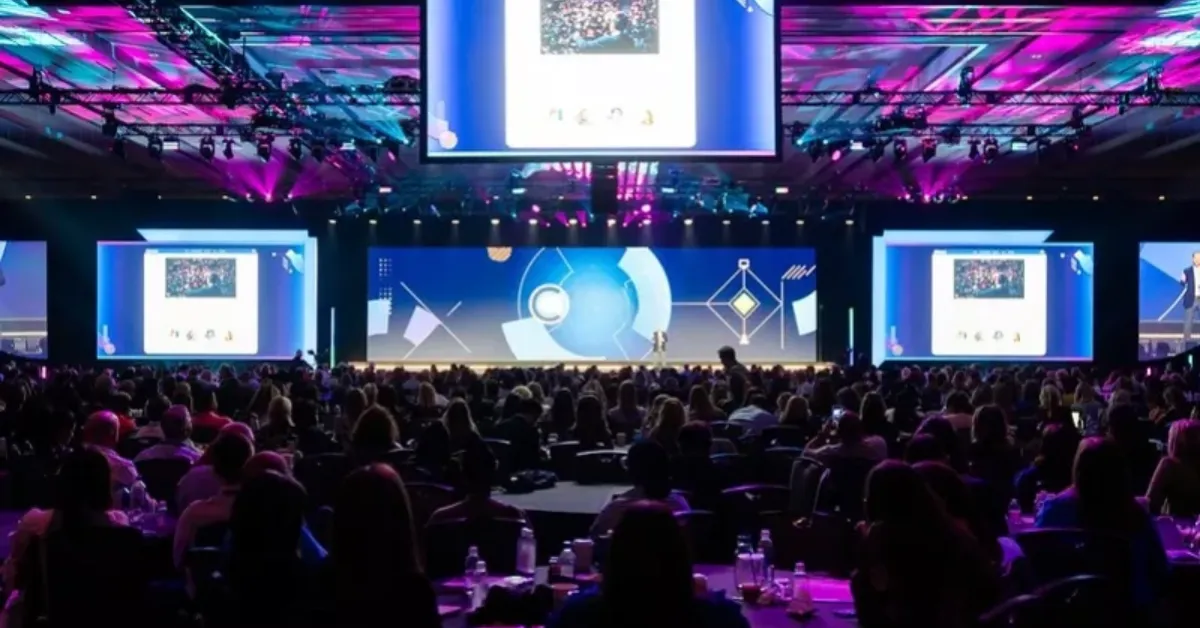
A simple warm-up activity where the speaker asks the audience to respond to a few quick prompts by raising their hands.
How it works:
The speaker runs through two or three easy questions, allowing the audience to raise their hands briefly before moving on to the next prompt. The activity is usually completed in under a minute.
Why it works for conferences:
It’s intuitive, requires no setup, and helps speakers quickly connect with the room while keeping the session on schedule.
A short, movement-based icebreaker that combines a quick stretch with a simple voting prompt.
How it works:
The speaker invites the audience to stand and stretch briefly, then asks a question where participants vote by standing in place or sitting back down. Once responses are acknowledged, the session continues.
Why it works for conferences:
It refreshes the room, boosts energy levels, and works well after long breaks or back-to-back sessions.
A quick pulse check where attendees share one word to describe their current energy level or focus.
How it works:
The speaker asks the audience to think of one word and submit it via a poll, chat, or by calling it out in smaller settings. Responses are acknowledged briefly before moving into the session.
Why it works for conferences:
It helps speakers read the room in seconds and adjust their delivery if needed, making it especially useful at the start of longer sessions or after breaks.

When used at the right moment, these quick icebreakers help speakers capture attention, reset energy levels, and transition smoothly into their content.
With so many icebreakers to choose from, the “right” one often depends on the context rather than the activity itself. A few simple considerations can help you narrow down options that feel natural for your audience and session format.
Ultimately, the best conference icebreaker is one that feels appropriate for the moment and comfortable for the people in the room. When in doubt, simpler and more inclusive options tend to work best, especially in professional conference settings.
Even the best icebreaker can fall flat if it’s poorly timed or overcomplicated. These practical tips help ensure your chosen activity feels natural, inclusive, and effective in a conference setting.

Used well, icebreakers don’t feel like an extra activity; they simply help the room settle, focus, and connect. When chosen with intention and delivered confidently, they create the right conditions for meaningful conversations and more engaged conferences.
Final thoughts
Conference icebreakers don’t need to be complicated, awkward, or time-consuming to be effective. When chosen well, they help large groups relax, encourage participation, and set the right tone for learning, networking, and collaboration.
If you’re looking for expert support to bring these moments together seamlessly, explore our conference management services to create engaging events that audiences genuinely enjoy.



We’ll get back to you as fast as we can with availability and next steps.
"*" indicates required fields

Hong Kong
Vietnam
Philippines
Singapore
Thailand
Japan
UAE
Egypt
China
South korea
Malaysia

OUR GLOBAL PRESENCE